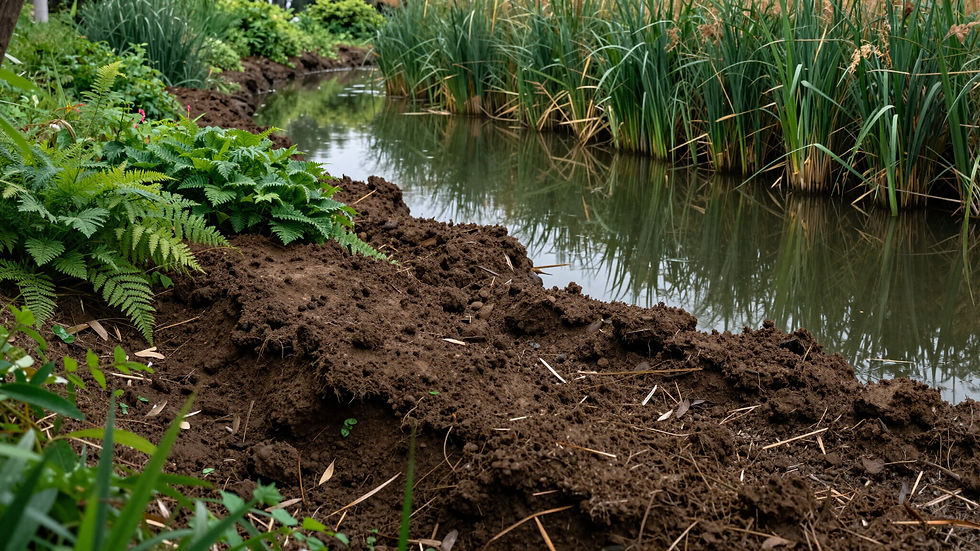
Most Yards Shed Water Instead of Holding It.
Compacted soil, thin turf, poor organic matter, and disconnected planting beds turn rainfall into runoff. Water leaves the property, nutrients move with it, and plants become dependent on irrigation, mulch, and repeated inputs.
Water doesn’t disappear. It either infiltrates… or it runs off.
We Build Soil Like Nature Does.
Living Soil
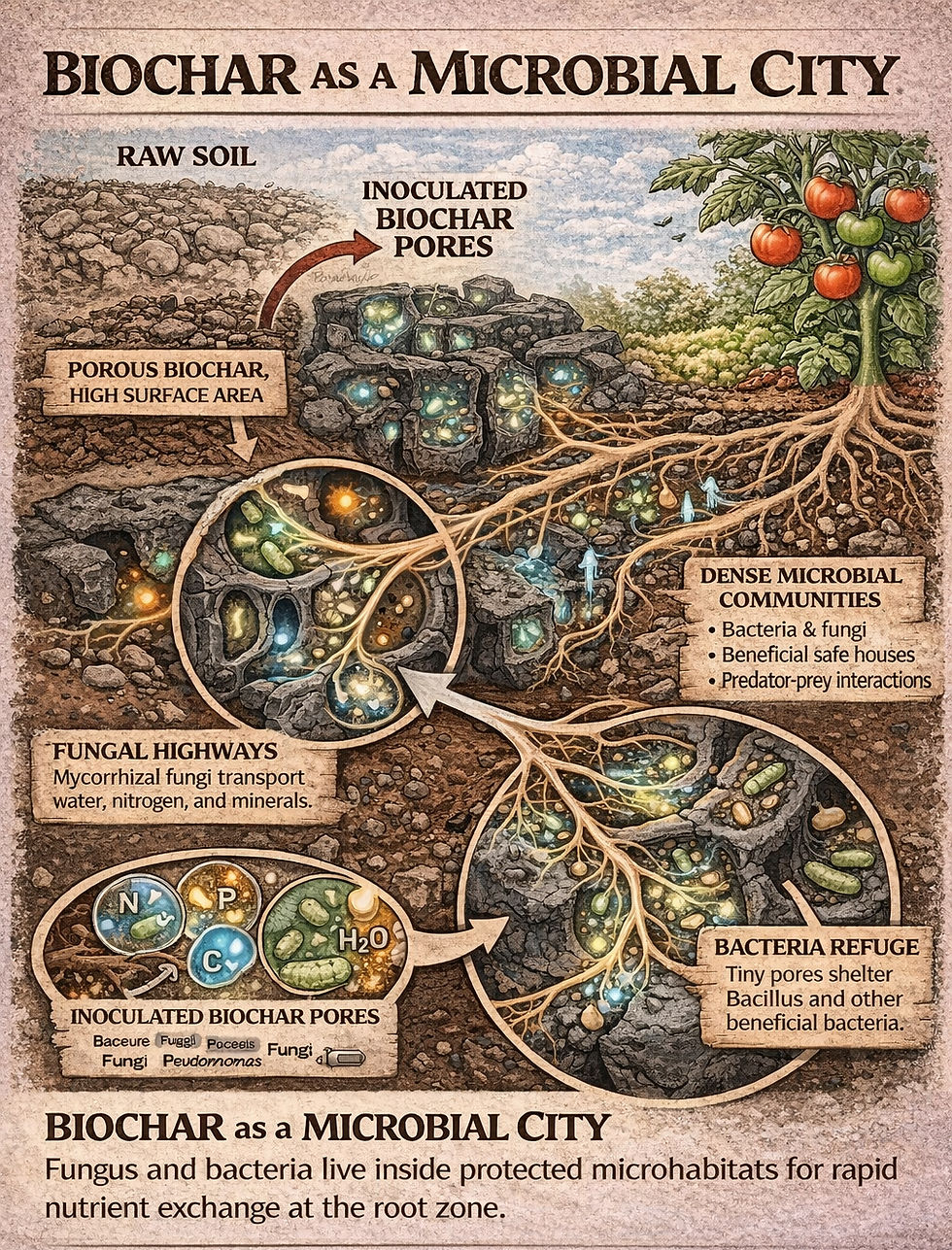
Compost, leaf mold, minerals, roots, fungi, microbes, and biochar working together.
Water-Holding Structure
Sponge beds, raised rain gardens, contour-aware layouts, mulch armor, and deep organic layers.
Native Plant Communities
Plants chosen for local soils, slope, sun, water movement, habitat value, and long-term resilience.
Most Yards Shed Water Instead of Holding It.
Compacted soil, thin turf, poor organic matter, and disconnected planting beds turn rainfall into runoff. Water leaves the property, nutrients move with it, and plants become dependent on irrigation, mulch, and repeated inputs.
Water doesn’t disappear.
It either infiltrates… or it runs off.
Regenerative Yard Systems
01
Soil & Water Assessment — $100
A site visit that identifies drainage patterns, soil condition, compaction, slope, sun/shade zones, and best next steps.
02
Living Soil Garden Builds
Raised beds, food gardens, perennial beds, containers, planter systems, and bioactive soil installation.
03
Sponge Bed Systems
Raised rain-capture beds built with woody biomass, leaf mold, compost, mulch, and living soil layers.
04
Native Plant & Habitat Design
Ecoregion-informed native plant systems for pollinators, birds, soil cover, root depth, and long-term yard resilience.
Biology Is Infrastructure.
Invisible life creates visible resilience. Microbes build soil structure. Soil holds water. Roots stabilize land. Native plants feed life.
Homeowners become stewards. Neighborhoods become living infrastructure.

01
Soil Health Check ($100)
The foundation of every project. We map your watershed and test your biology.
The Soil-Worx System
02
Garden Build
Professional construction using regenerative techniques to jumpstart growth.
03
Sponge Bed System
Installation of deep water-holding beds that absorb rainfall and store it for your plants.
04
Stewardship Plan
Ongoing guidance to ensure your living system matures into a self-sustaining ecosystem.

Turn Your Yard Into a Water-Holding Ecosystem
Most yards shed water. We design systems that absorb it.
- Captures runoff
- Stores moisture
- Reduces irrigation
- Builds soil over time
👉 It’s a raised garden + water system combined

Flow Back to the River
A portion of every project supports conservation in the Little Miami watershed. Our work is designed not just for your land—but for the health of the entire ecosystem downstream.
Conservation partners and resources:
Built From Experience
I didn’t start in soil.
I started in systems — media, production, structure.
What I learned is simple:
Everything works better when the system is right.
So I applied that thinking to land.
Now we build soil the way nature does:
Layered. Living. Regenerative.


Tested in a Real Habitat System.
This isn’t theory. Our home site is an NWF Certified Wildlife Habitat and an active Soil-Worx field lab — combining food production, woody habitat, native-supportive structure, propagation, and regenerative stewardship in one living system.
Habitat Infrastructure
Food + Propagation
Regeneration in Practice
Living Proof

Flowing Back to the River
A portion of every project supports conservation in the Little Miami watershed. Our work is designed not just for your land—but for the health of the entire ecosystem downstream.

We work inside the Little Miami watershed, building soil systems that keep water in the ground and out of the river.
Water Doesn’t Disappear: Read the Full Story
On Substack, Bob breaks down how water moves through your land, why most yards shed it, and how **living soil** systems like Soil-Worx sponge beds turn rainfall into stored fertility. From the article: “Water doesn’t disappear. It either infiltrates into **living soil** or **runs off the land**.”

Turn your yard into a water system.
Capture rainfall.
Store it in soil.
Grow from it.
Less runoff.
Less watering.
More life.